

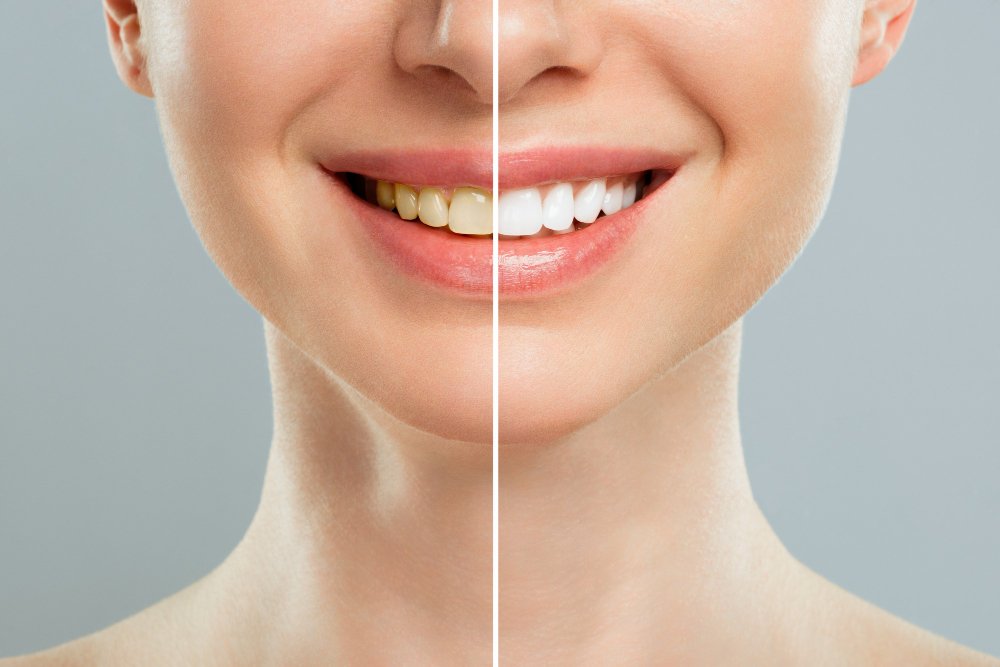
Teeth Whitening
Teeth whitening—also called dental bleaching—is one of the most requested cosmetic treatments in contemporary dentistry. Modern whitening is scientifically proven, minimally invasive, and safe when supervised by a dental professional. It can significantly improve a smile by lightening stains and discoloration without altering a tooth’s natural structure. Current clinical guidelines emphasize using research-backed whitening agents, personalized treatment plans, and supervised care to maintain both effectiveness and oral health.
Why Teeth Become Stained
Tooth discoloration develops from a combination of extrinsic and intrinsic factors, each responding differently to treatment.
Extrinsic stains occur on the outer enamel surface and are caused by:
-
Tea, coffee, wine, and turmeric
-
Tobacco use
-
Pigmented foods
-
Poor oral hygiene
These stains typically respond well to professional cleaning and whitening.
Intrinsic stains occur within the deeper layers of the tooth. Factors include:
-
Natural aging
-
Internal tooth changes after trauma
-
Certain medications (e.g., tetracycline)
-
Excessive fluoride exposure
-
Developmental enamel defects
Because intrinsic discoloration lies beneath the enamel, it requires peroxide-based whitening agents that can penetrate and lighten the tooth from within.
The Science of Whitening: How It Works
The most widely studied whitening ingredients are hydrogen peroxide (HP) and carbamide peroxide (CP). HP acts quickly, while CP breaks down slowly into hydrogen peroxide, making it suitable for longer wearing times.
Whitening works through oxidation, where peroxide molecules diffuse through enamel and dentin, breaking apart pigmented molecules (chromogens). This brightens the tooth without removing enamel or weakening its structure. Decades of research confirm that, when used properly, peroxide agents:
-
Do not harm enamel
-
Do not cause structural tooth loss
-
Produce stable and lasting results
ADA guidelines support peroxide-based whitening as safe when delivered under dental supervision.
Types of Professional Whitening: Evidence-Based Options
Modern dentistry offers three main whitening pathways, each supported by clinical studies.
1. In-Office Whitening (Professional Chairside Treatment)
This method uses higher concentrations of peroxide (25–40% HP) applied by a trained dentist. Special barriers protect the gums, and the whitening process is carefully timed.
Advantages include:
-
Quickly visible improvement
-
Controlled, safe application
-
Significant shade change in a single visit
While some systems use lights or lasers, current evidence shows these primarily accelerate the chemical reaction rather than improve final shade beyond peroxide itself.
2. Dentist-Supervised At-Home Whitening
This approach uses custom-fitted trays and lower-peroxide gels (10–22% CP). Patients wear the trays for a few hours daily or overnight for 1–2 weeks.
Research shows that at-home whitening provides the most stable long-term results, with high patient satisfaction. Because the trays are custom fitted, gel distribution is even and gentle on gums.
3. Over-the-Counter (OTC) Whitening Products
Whitening strips, pens, toothpaste, and LED kits are widely available. While convenient, they contain lower-concentration peroxide and may not fit the teeth as precisely.
OTC products can lighten mild stains but are less effective for deeper discoloration. Choosing ADA-accepted products enhances safety.
Safety and Sensitivity: What Patients Should Know
Professional whitening is safe, but mild short-term effects can happen:
-
Tooth sensitivity
-
Gum irritation
-
Transient dehydration of enamel, which can temporarily make teeth appear whiter before stabilizing
Dentists manage this with fluoride varnish, potassium nitrate, desensitizing gels, and tailored usage instructions. Long-term research confirms whitening does not thin enamel, damage nerves, or cause permanent sensitivity.
Who Benefits Most From Whitening?
Ideal candidates include people with stains caused by foods, drinks, tobacco, or natural aging. Whitening is also an excellent first step before cosmetic treatments like veneers, crowns, or bonding.
However, whitening may not work well for:
-
Tetracycline stains
-
Teeth with extensive restorations (which do not whiten)
-
Patients with active decay or gum infections
-
Pregnant or breastfeeding individuals
A dental examination ensures safe and realistic outcomes.
A Modern, Patient-Centered, Evidence-Based Philosophy
Today’s whitening protocols focus on:
-
Minimally invasive care with no drilling
-
Customized treatment plans based on stain type, shade goals, and sensitivity level
-
Protection of enamel and soft tissues
-
Long-term maintenance using touch-up kits and healthy habits
-
Realistic expectations supported by clinical science
Professional teeth whitening offers a predictable, safe, and effective way to enhance a smile—grounded in decades of research and guided by modern dental standards.